What a SoCal Edible Gardens install looks like
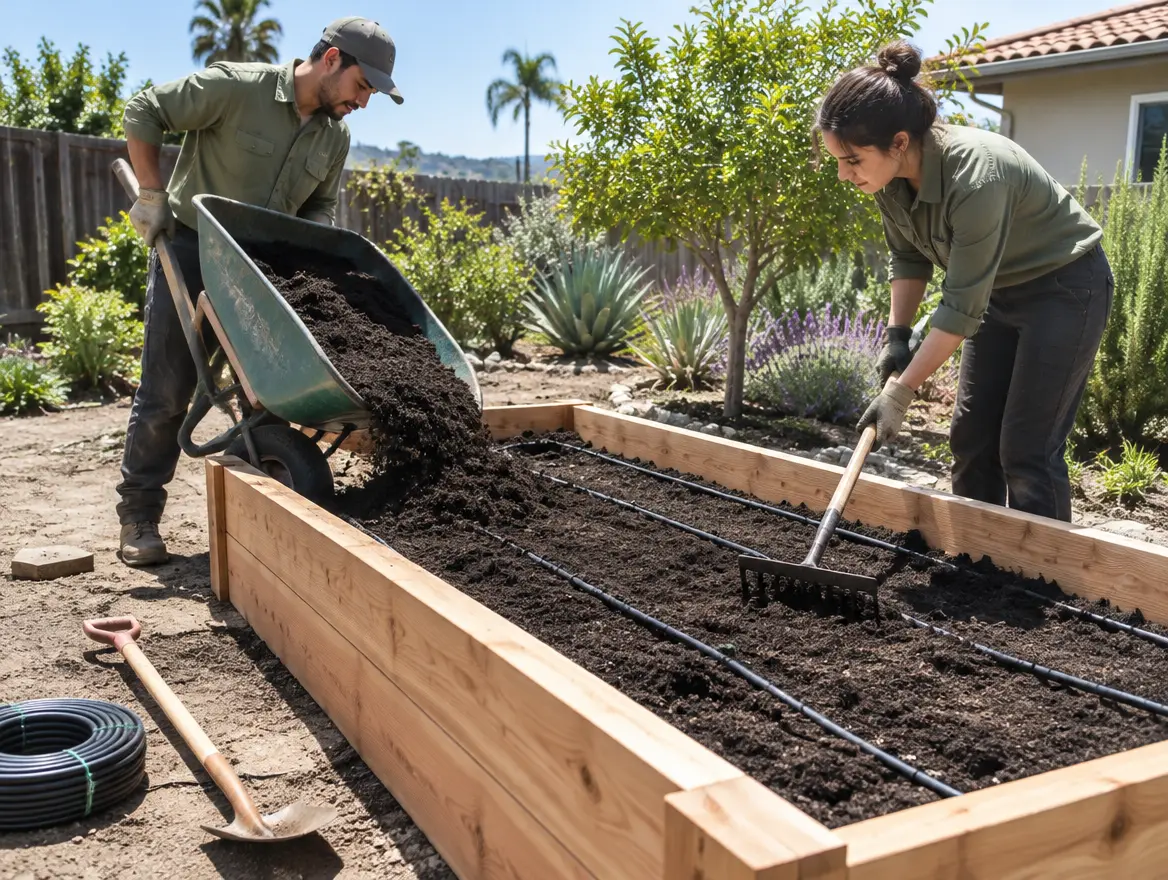
Most gardens go in over one or two days. Day one is layout, site prep and building the beds. Day two is soil, drip lines, timer setup and planting. When the crew leaves, you have a working garden that is already watering itself.
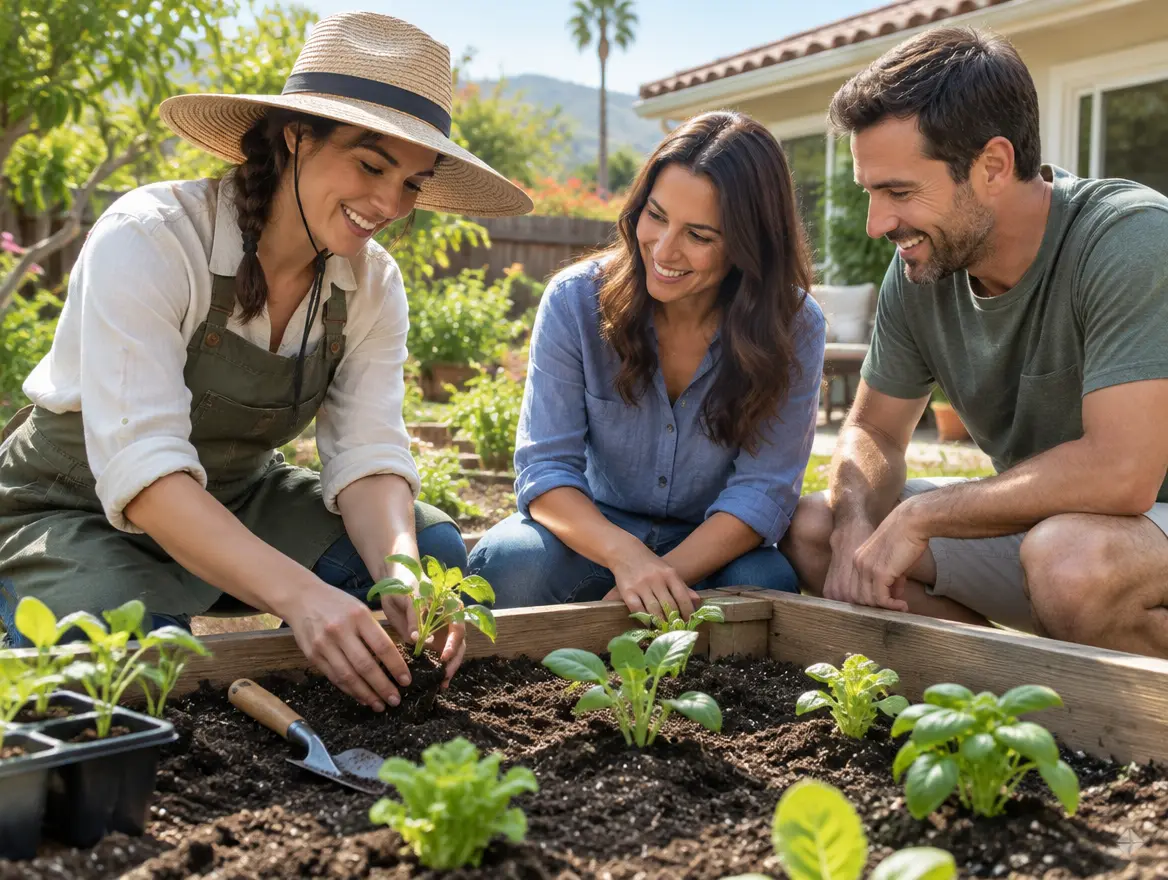
We plan every garden around how you actually cook and eat. If your family goes through salad greens, tomatoes and herbs, that is what we plant the most of. If you want salsa ingredients, a pizza garden or a kids’ snack garden with strawberries and snap peas, we build the crop plan around it.
Built for Southern California growing
Coastal Southern California is one of the easiest places in the country to grow food. Long Beach and the surrounding cities sit in USDA zones 10a and 10b, which means mild winters and almost no frost. A well-designed edible garden here produces in two main seasons:
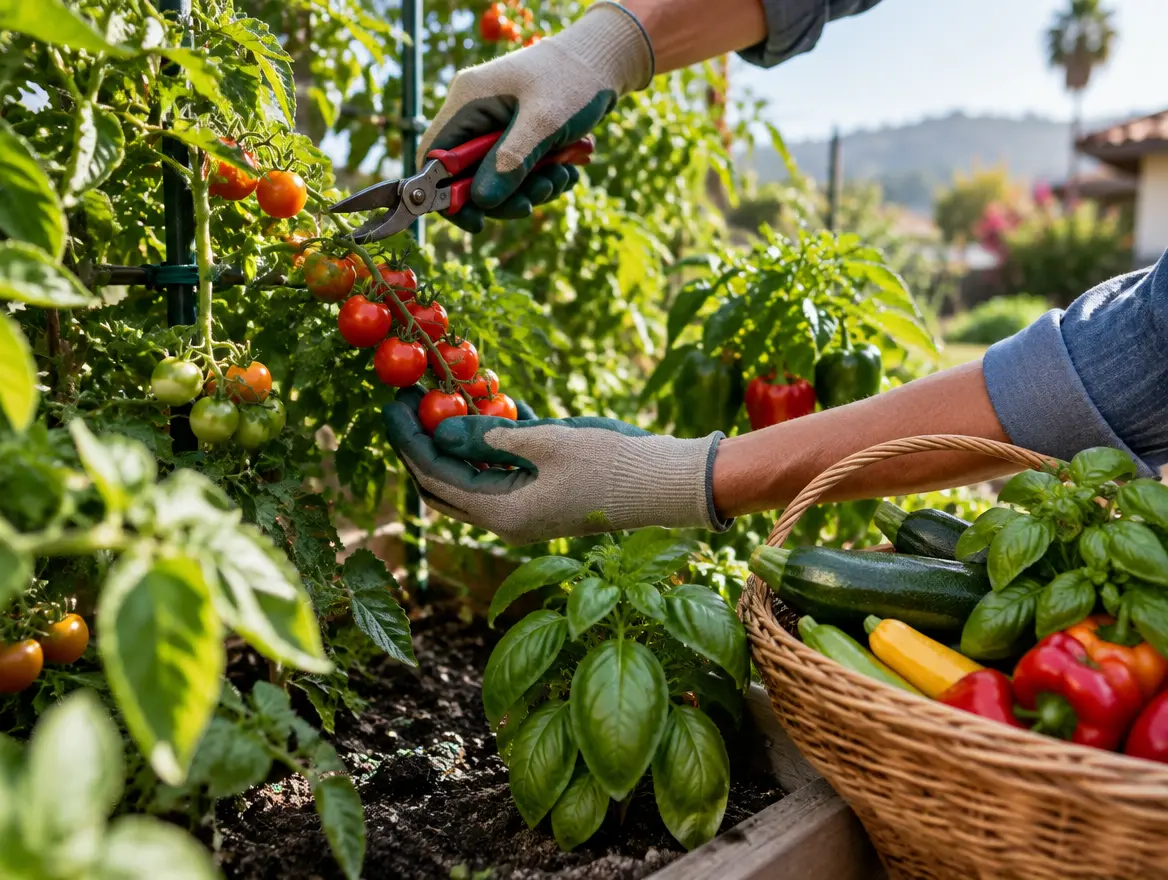
- Warm season (spring to fall): tomatoes, peppers, cucumbers, zucchini, beans, basil, melons
- Cool season (fall to spring): lettuce, kale, chard, broccoli, peas, carrots, beets, cilantro
We set your drip schedule for our dry summers and adjust plant choices for marine layer gardens near the coast versus hotter inland yards.
Raised beds, the right way
Cheap kits and shallow planters are why many backyard gardens fail. We build sturdy beds that last for years, fill them with a compost-rich organic soil blend and put drip emitters where the roots are. Good soil and steady water solve most garden problems before they start.
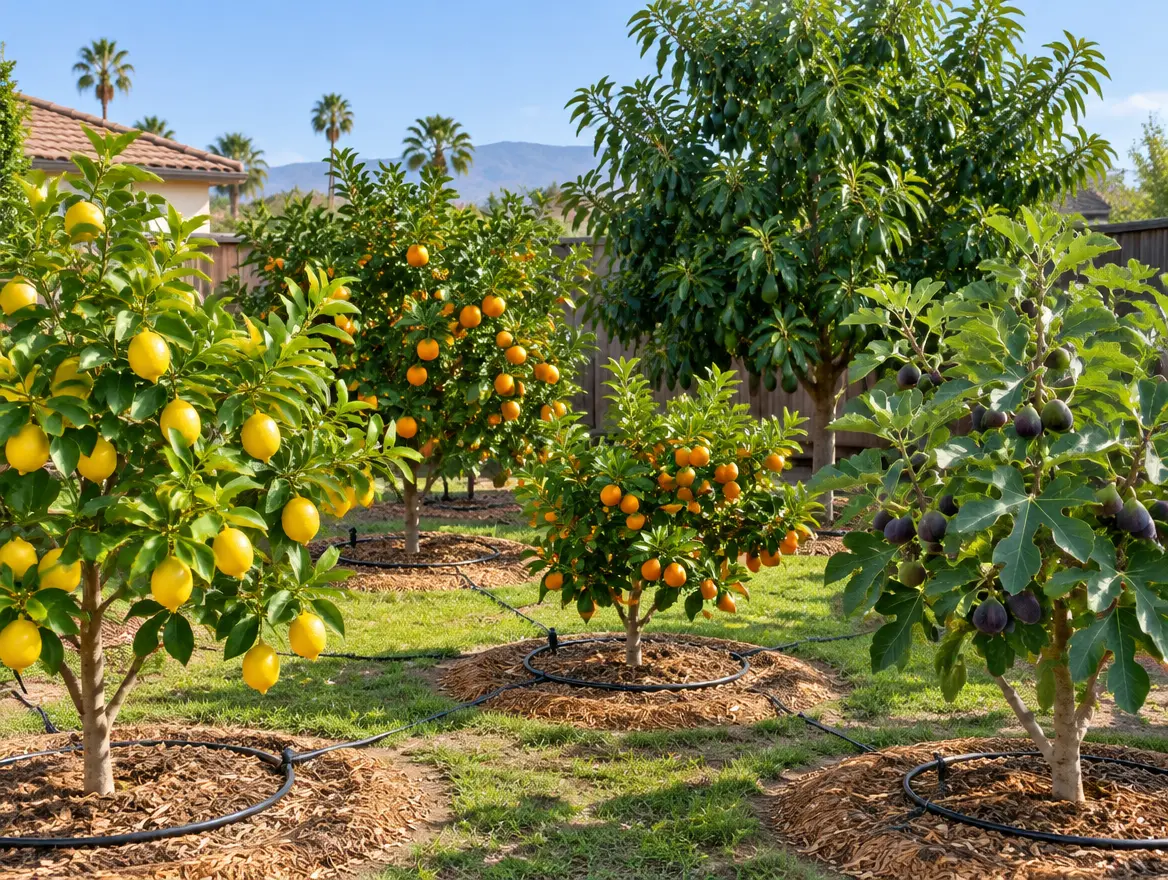
Want help keeping it productive after install? Add an organic garden maintenance plan, plant a few fruit trees, or book garden coaching to learn the basics yourself. See typical package ranges on our pricing page.